

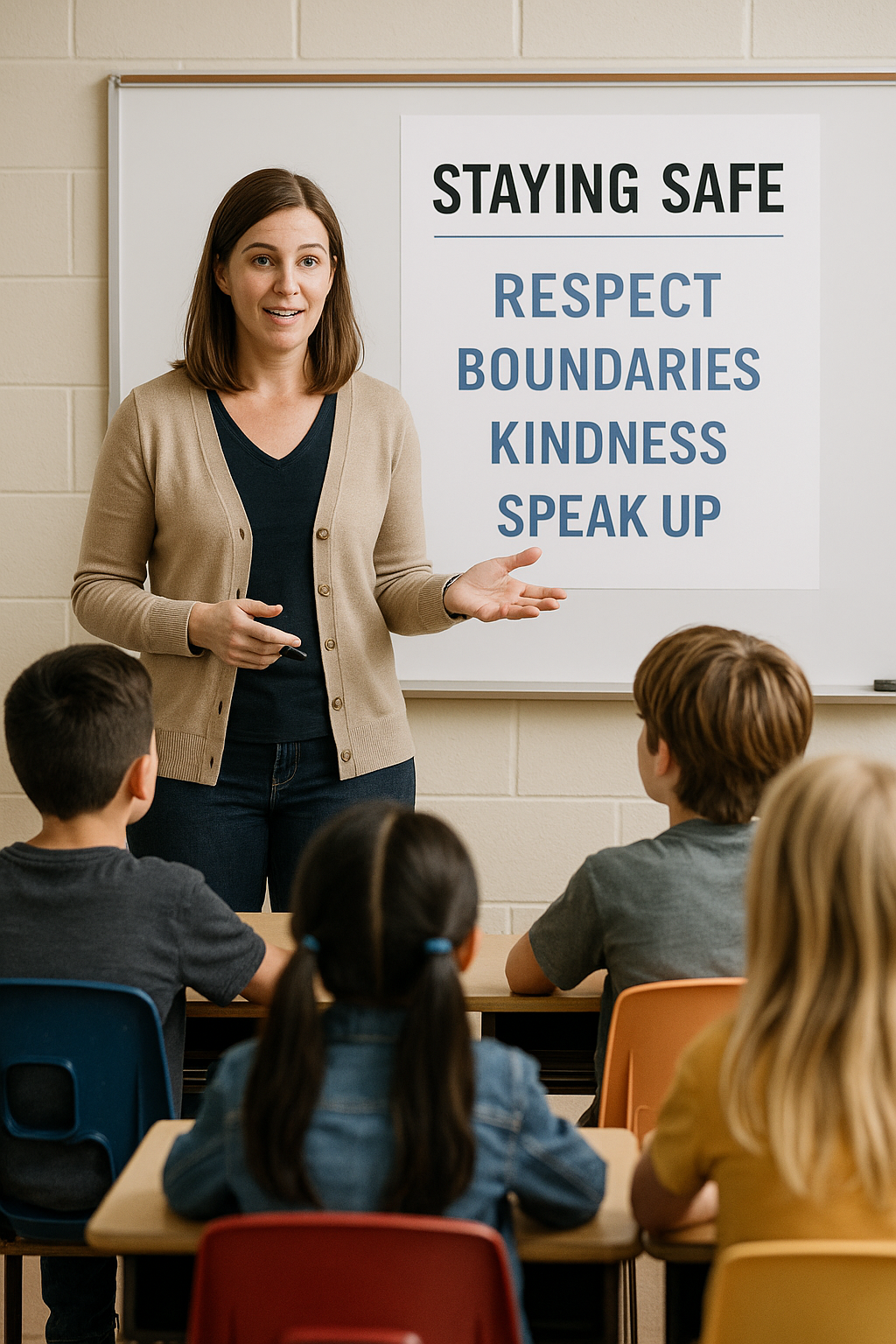
Silence is where abuse thrives.
For generations, families, schools, and institutions have avoided difficult conversations about abuse believing children are “too young to understand.” Silence doesn’t protect children; it prepares them for exploitation.
When we teach children what love is and what it is not, we give them the tools to recognize danger, speak truth, and break cycles that have destroyed families for decades. Awareness is not fear—it’s freedom.
Why Early Education Matters
Children raised in environments where abuse is normalized—whether through violence, neglect, or emotional manipulation—often grow into adults who mistake control for care. They are conditioned to remain silent, to tolerate mistreatment, or to confuse loyalty with love.
Teaching children to identify all forms of abuse early in life builds emotional intelligence, self-trust, and safety literacy. It helps them set healthy boundaries and speak up when something feels wrong.
Abuse education isn’t a single conversation; it’s a lifelong dialogue that evolves as children grow. And it starts at home—with parents who choose transparency over secrecy and protection over image.
The Many Forms of Abuse and How to Name Them
- Familial Abuse
This occurs within the family system—parents, siblings, or relatives who manipulate, control, or harm others. It often hides behind cultural norms like “respect your elders” or “family comes first.”
In narcissistic or dysfunctional families, the scapegoat or black sheep becomes the emotional punching bag. Teaching your children that family love should never cost their peace or safety helps them distinguish connection from control. - Emotional and Psychological Abuse
This is the most common and least recognized form of abuse. It includes gaslighting, manipulation, shaming, silent treatment, and guilt-tripping.
Children must learn that love never demands silence or obedience at the cost of truth. Emotional safety is just as important as physical safety. - Physical Abuse
Any use of force intended to control, intimidate, or punish. While discipline is often used as justification, physical punishment teaches fear, not respect.
Children should understand that no one—including parents, teachers, or peers—has the right to hurt their body. - Sexual Abuse
This includes any sexual act, exposure, or coercion involving a child. It can be committed by adults, peers, or even trusted authority figures.
Teach children the correct names for their body parts, the concept of bodily autonomy (“my body, my choice”), and that secrets about touching are never okay.
Most importantly, let them know they can tell you anything and they will be believed. - Systemic Abuse
This form occurs through institutions—schools, courts, foster systems, or law enforcement—where bias, negligence, or corruption perpetuate harm.
Children of survivors should know that not all systems are just, and that speaking truth to power is brave, not rebellious. They must learn that systems can fail, but truth must not. - Educational Abuse
When educators or institutions shame, silence, or ignore students instead of nurturing them. It includes bullying, discrimination, academic sabotage, or unfair labeling (e.g., “problem child,” “lazy”).
Teach children to recognize when authority is misused and that curiosity and questioning are signs of intelligence, not disrespect. - Religious Abuse
This happens when faith is used as a weapon—through fear, guilt, or control. “God will be angry” or “you’ll go to hell” are phrases that teach shame, not morality.
Children should understand that real faith uplifts and frees the spirit—it never enslaves it. - Social Abuse
Occurs through isolation, rumor-spreading, exclusion, or online harassment. Children today live much of their emotional lives online. Teaching digital boundaries, consent, and self-worth in the age of social media is as vital as teaching physical safety.
Why Scapegoats Must Break the Cycle
For scapegoats and black sheep, those who have survived narcissistic or abusive family systems, education is both protection and liberation.
When you go “no contact,” you are not rejecting family, you are rejecting abuse. But your children deserve to know why those boundaries exist.
Children should never grow up confused about why they can’t visit certain relatives or why certain family members speak ill of you. Age-appropriate honesty protects them from triangulation and future manipulation.
Explain simply:
“Some people in our family hurt others and never take responsibility. I made a choice to keep you safe. That’s what love means.”
It’s not about vilifying relatives, it’s about modeling truth, boundaries, and accountability.
Legal Protections: Safeguarding Children Beyond Your Lifetime
Abuse prevention doesn’t end with no-contact, it extends into planning for your children’s future. If something were to happen to you or your spouse, the wrong family members could try to claim custody or control over your children’s inheritance.
To prevent this:
- Establish Legal Guardianship with a Lawyer.
- Choose godparents, close friends, or trusted relatives who share your values.
- Put your wishes in writing through a will or guardianship document.
- Make sure it clearly states that specific relatives are to have no contact or custody rights under any circumstance.
- Document Everything.
- Keep records of abuse, restraining orders, police reports, and any communications showing why contact is unsafe.
- These documents protect your children and reinforce your legal stance.
- Create an Inheritance Trust.
- Work with an attorney to ensure funds or property are managed by a trustee, not family members who have shown patterns of abuse or financial instability.
- Review and Update Regularly.
- Life changes. Revisit your documents every few years or after major transitions like marriage, divorce, or relocation.
Putting this in writing isn’t paranoia, it’s prevention. It’s how you guarantee that the cycle ends with you.
Breaking Generational Silence
Teaching children about abuse is not about teaching them to fear the world, it’s about giving them discernment. It’s about creating a generation who knows that love is not earned through suffering, that forgiveness doesn’t mean access, and that silence is not safety.
When we give children language for pain, they can name it.
When they can name it, they can stop it.
And when they can stop it, the world begins to heal.
Final Reflection
You cannot protect your children from every hardship, but you can equip them with the wisdom that kept you alive.
To every black sheep, every survivor who walked away: your courage to speak truth is the inheritance your children need most.
Teach them early.
Protect them fiercely.
And when you’re gone, make sure the law still honors the boundaries that kept them safe.
Because love without protection is not love—it’s neglect.
And you have broken that cycle for good.